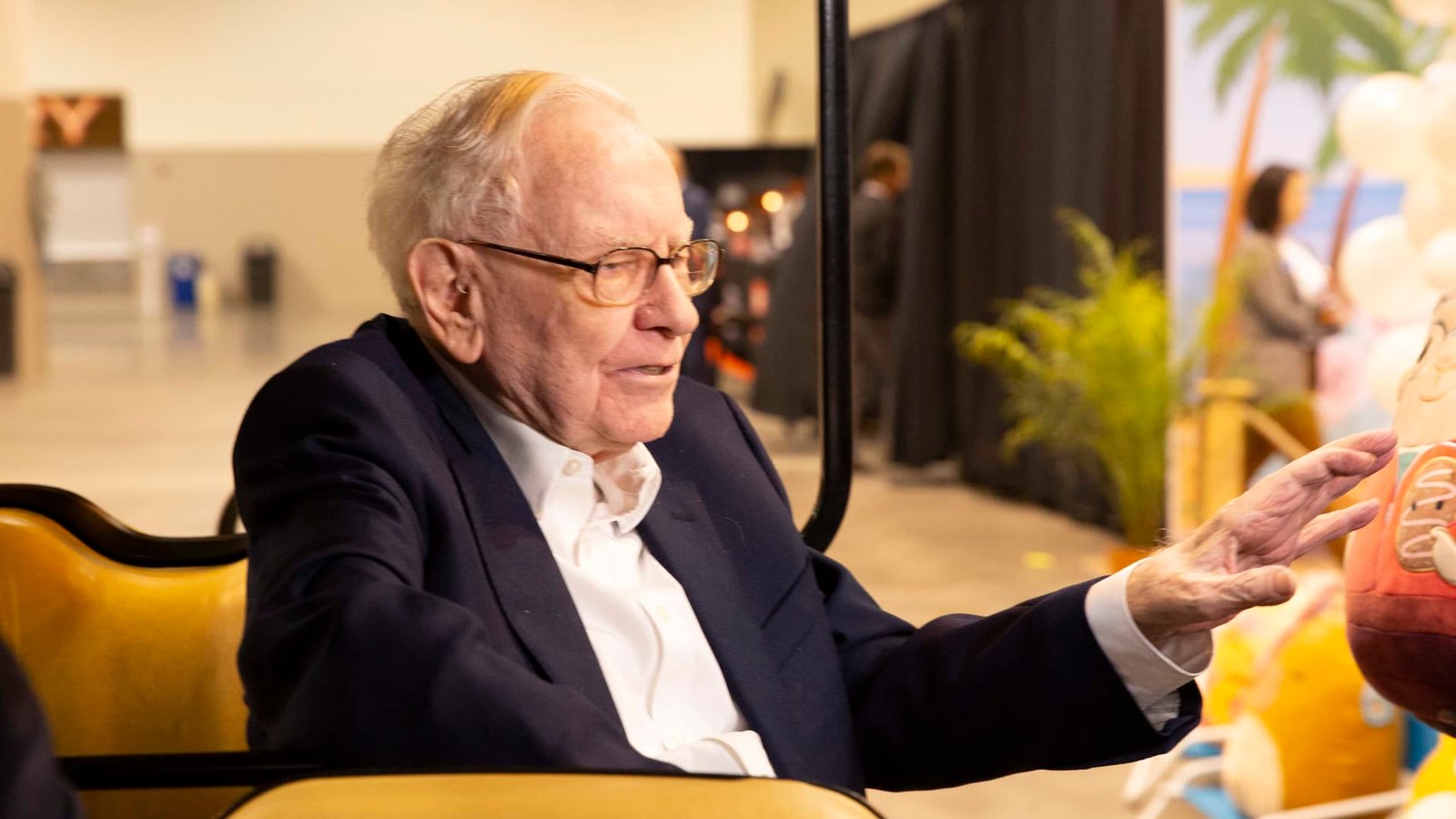
Warren Buffett’s one-time favorite yardstick for stock market valuations has climbed to an all-time high, reviving fears that investors are once again testing the limits of market exuberance. The gauge, dubbed as the Buffett indicator, measures the total value of publicly traded U.S. stocks (Wilshire 5000 index) against the nation’s gross national product. In a 2001 Fortune op-ed, Buffett called the indicator “probably the best single measure of where valuations stand at any given moment.” The indicator has also been referenced by famed investors including Paul Tudor Jones. “If the percentage relationship falls to the 70% or 80% area, buying stocks is likely to work very well for you,” Buffett said in a 2001 speech excerpted by Fortune magazine after the indicator had neared 150% the year prior during the Dotcom bubble. “If the ratio approaches 200% — as it did in 1999 and a part of 2000 — you are playing with fire.” At a whopping 217%, it now sits well above the peaks reached during the Dotcom Bubble, as well as the pandemic-era rally in 2021 when it topped 190%. By that standard, the stock market today is in uncharted waters as equity values are now expanding far faster than the growth of the broader U.S. economy. The market rally has been fueled by megacap technology companies, which have plowed billions of dollars in development of artificial intelligence, as they are rewarded with rich multiples for the promise of this new era. Other valuation gauges are flashing similar signals. The S & P 500’s price-to-sales ratio recently climbed to 3.33, an all-time high, according to Bespoke Investment Group. For comparison, the Dotcom peak in 2000 topped out at 2.27, and the post-Covid boom reached 3.21 before valuations cooled. Still, some have argued that the Buffett Indicator may no longer carry the same message it once did. The U.S. economy has shifted dramatically over the past two decades, becoming less asset-intensive and increasingly powered by technology, software and intellectual property. GDP and GNP may understate the value of an economy built on data networks and innovation rather than physical factories. Therefore, higher equity valuations may be justified for what remains the world’s most productive and innovative economy. Buffett hasn’t commented on this indicator in years. But he has been building a cash fortress at Berkshire Hathaway the last two years as he gets ready to hand the CEO reins to Greg Abel. Second-quarter earnings showed a cash hoard of $344.1 billion and the conglomerate was a net seller of equities for a 11th quarter in a row. Even if it is outdated, coupled with the Oracle of Omaha’s current positioning, the indicator at these extreme levels is sure to raise some eyebrows.

Thursday, September 17

Buffett indicator stock market overvalued