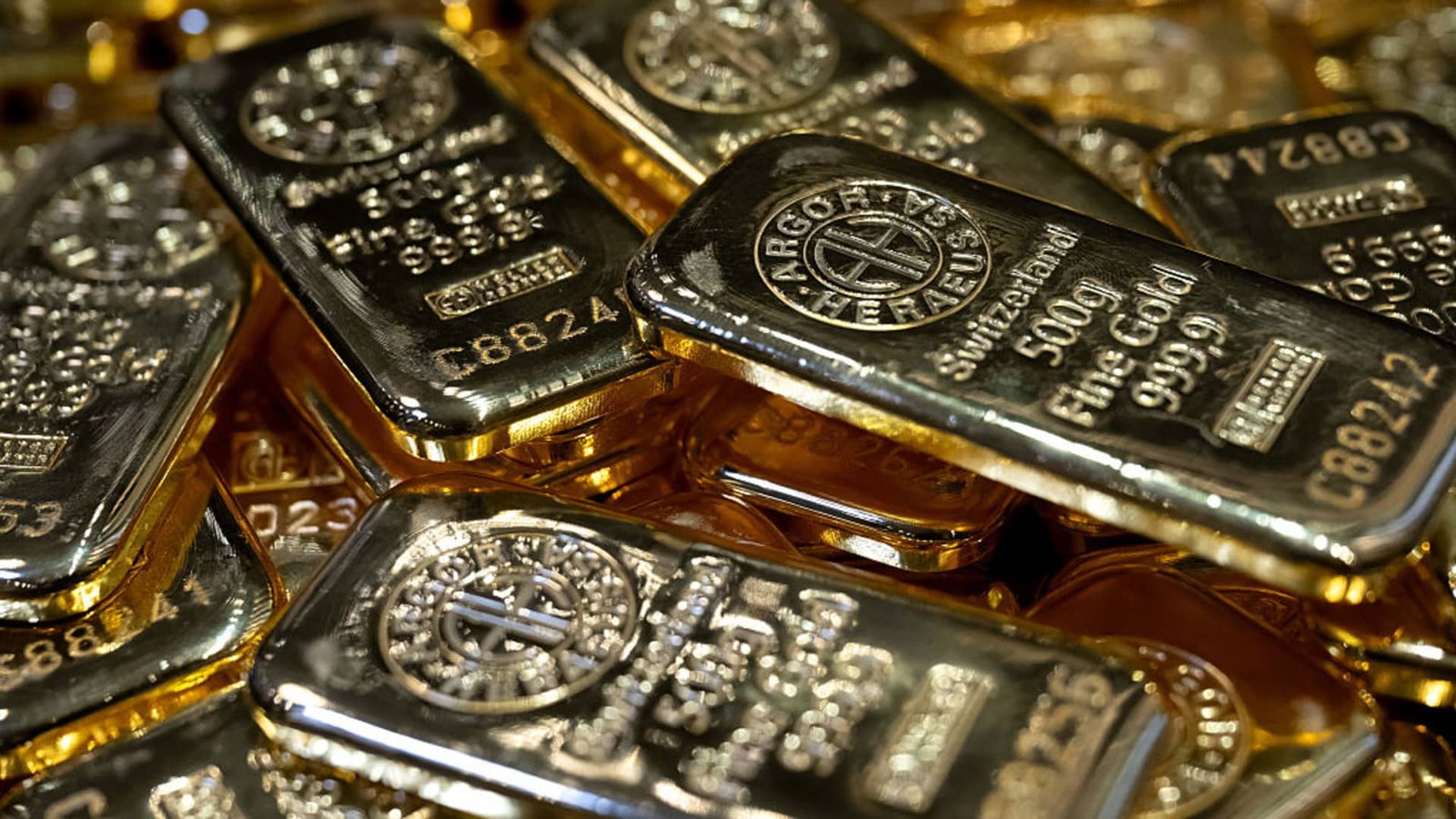
Gold prices have been smashing new records this year, and a growing cadre of wealthy investors and family offices are no longer content to let their gold bars sit idle in vaults. They are leasing their bullion to refiners, jewelers, and fabricators for interest, defying gold’s reputation as a non-yielding asset. “We’ve got a whole bunch of phone calls with people saying, I have $2 million of gold bars, I have a million dollars-worth of gold bars. Can you lease it out for me?” said Gaurav Mathur, founder of SafeGold. “What’s changed very substantially in the last few months is that a lot of the wealthier customers have now got comfortable with leasing,” he told CNBC, adding that leasing volumes at SafeGold have increased from $2 million to $40 million since the start of the year. People are no longer just buying gold and waiting for it to go up to $5,000. They want to hold it regardless of price — and then the mind immediately turns to: how do I put it to work? Founder and CEO of Monetary Metals Keith Weiner Industry veterans whom CNBC spoke to said the appeal is intuitive: investors who already plan to hold gold can earn yields paid in gold through lease payments, while jewelers and fabricators use those leases to fund the gold they need for day-to-day production. Because these borrowers repay the same amount of gold rather than a dollar figure, they avoid exposure to price swings while keeping inventory on hand. SafeGold currently offers a 2% yield on secured leases and a 4% yield on unsecured ones. Rates rose as high as 3% and 5% earlier in the year. “People are no longer just buying gold and waiting for it to go up to $5,000,” said Keith Weiner, founder and CEO of Arizona-based Monetary Metals, which arranges gold leases between global investors and industrial users. “They want to hold it regardless of price — and then the mind immediately turns to: how do I put it to work?” Joseph, a U.S. entrepreneur who declined to share his last name, said he doubled the amount of gold he leases through Monetary Metals over the past year as gold prices surged. “The only certain bet I know is that currencies will depreciate,” said Joseph, who earns roughly 3.8% paid in gold. “Central banks have been accumulating gold at an extraordinary rate. We live in a world where the global debt is unprecedented. Accumulating gold is the easiest, stress-free decision one can make,” he said. How it works Gold leasing works much like a loan, except the asset is in ounces, not cash. Though the structures differ slightly, the underlying logic is the same: investors supply gold to a leasing platform or financier, who then lends that metal to a business. For a jeweler, refiner or fabricator who needs gold to make jewelry or components, they don’t have to borrow cash and risk price swings while holding it. They can then sell their finished products at the current gold price. The borrower then pays a lease rate — a form of interest in gold — and at the end of the term, either returns an equivalent quantity of metal or rolls the lease forward. For borrowers, the appeal lies in simplicity and accounting clarity. “Gold leasing solves two problems,” said CEO of Kilo Capital, Wade Brennan. “It gives them the funding they need and removes the price risk. If they bought gold with a bank loan, they’d have to hedge, or they’d be exposed to the gold price. Most business people aren’t savvy with futures.” Lending gold carries a counterparty risk. In other words the risk that the borrower may not pay you back. World Gold Council John Reade When it’s time to return the gold, the borrowers buy back the same amount of bullion at current prices. So even if gold jumps, both their selling price and repayment cost rise in tandem. “If they lease the gold at the beginning… he never has to care whether the gold price goes up or down,” said Brennan, whose clientele includes jewelers, wholesalers, bullion dealers and technology firms that use the gold in sputtering targets used to coat semiconductors or high-purity components such as specialized connectors. Gold prices have risen more than 50% so far this year, even after pulling back from last month’s peak above $4,381.21, and remain on track for their strongest annual gain since 1979, data from LSEG showed. Record prices have boosted the dollar value of every bar, increasing the financing needs across the supply chain. Demand for gold leasing amongst his jewelry sector clients has doubled in the past four months, said Patrick Tuohy, chief executive of Goldstrom. “Because gold prices have gone up significantly over the past year, the same $100,000 bank loan now buys a lot less gold. Jewelers need alternative financing — and gold-on-gold leases solve that,” said the Singapore-based precious-metals trader, who leases for international clients from Dubai to Ghana. Gold leasing is not a new phenomenon, with large institutional players such as central banks and major bullion banks being the traditional strongholds in the space. However, what has changed more recently is that individual wealthy investors are now joining through leasing platforms, said Tuohy. Risks? However, gold leasing carries with it counterparty and operational risks that ordinary storage does not. “Lending gold – whether on a lease or a swap – carries a counterparty risk. In other words, the risk that the borrower may not pay you back,” said World Gold Council’s John Reade. Although the interest rates that could be achieved by lending gold to these companies could look attractive, holders of gold should consider the creditworthiness and trustworthiness of the borrowers and act with extreme caution, Reade noted. The number-one risk for metal lessors is straightforward: default. While rare, if the borrower runs into trouble or mismanages cash flow, they may not return your gold bars on time. Or, they can return “fake” gold bars, or gold that does not have the same purity as claimed or leased out in the first place. SafeGold’s Mathur acknowledged those concerns and said the company tests every returned gold bar for authenticity. Similarly, Monetary Metals’ Weiner said his platform uses insurance, audits, cameras, and radio frequency identification technology to limit theft and fraud, but he cautioned that “you could never say zero” when it comes to eliminating risks. Goldstrom’s Tuohy said that its RFID-tag system attaches radio chips to every piece of jewelry made from its investors’ leased metal. These tags transmit live inventory data back to Goldstrom’s platform. “We literally turn the jeweler’s shop into a vault,” Tuohy said. Cameras and sensors track movement 24/7, while insurers underwrite theft or employee fraud risk. If a jeweler defaults, Goldstrom can legally seize and melt the jewelry to recover the gold, making losses rare. “This model has been running in the Middle East since 2006 — and there’s never been a default,” Tuohy said.

Wednesday, September 16

the rich are renting their bars for income as prices remain high