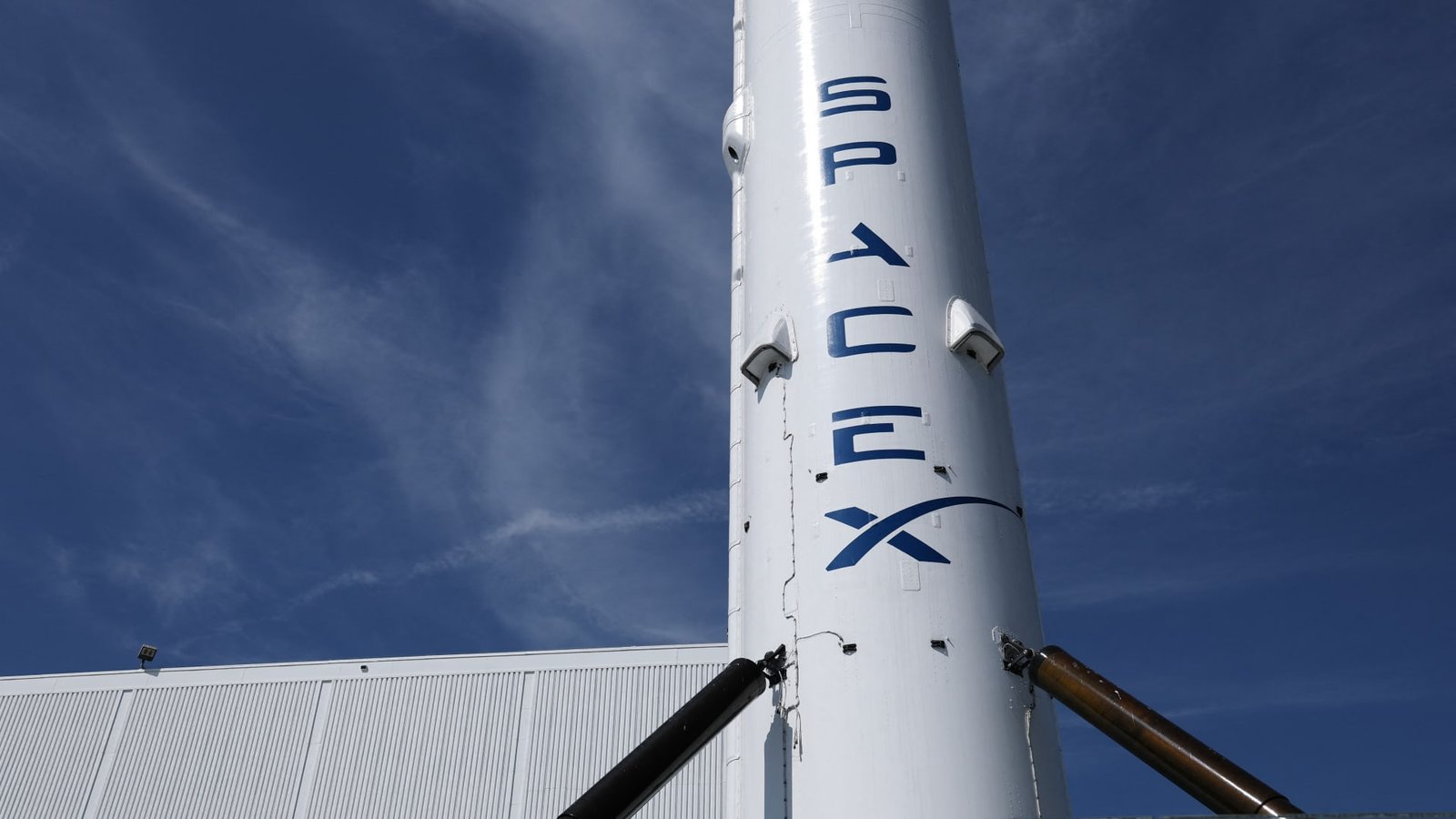
We don’t have enough money coming into the stock market to handle the three big IPOs that are headed our way. Certainly, we can all be excited about how SpaceX could be a $2 trillion company, OpenAI is raising money at an $830 billion valuation, and Anthropic is worth $380 billion and will probably be far larger before launching. I am far more concerned, though, about where all that money will come from. Right now, our valuations for these companies are being set by institutions that seem like they have limitless amounts of money. You never hear of any real resistance to any price. OpenAI, if you recall, was valued at $500 billion and then, a few weeks later, at $830 billion, with nothing real happening other than continued user growth. The numbers almost seem to be made up. There’s no price-to-earnings multiple; these companies lose gobs of money. There are no plans to make money. They can justify their profitless natures because they are all in those once-in-a-lifetime moments where they are pulling away from the pack, and they can only stall themselves by insisting on being profitable. The marketplace itself is exerting no discipline whatsoever. All fun and games — until someone gets hurt. This market has so much work cut out for it. We have the ongoing war in the Middle East, where the presumption is that air power can destroy the current Iranian regime and force the Strait of Hormuz to open. So far, that has not been the case. We do know that the market cannot go up as long as oil goes higher. It’s just axiomatic. There’s no saying, “This time it is different,” as there is nothing different about a commodity that, when it goes higher, knocks everything else down. You can argue that we have more oil than in the past. But then look at the price of the pump. You can say that artificial intelligence is creating more value, but it is not going to make up for the earnings-per-share losses in the S & P 500 . With an 11.4% jump on Thursday, U.S. oil benchmark WTI crude for May delivery rose almost 12% over the previous four-day stretch, its sixth positive week out of seven. No one doubts the inflationary drag of oil. To state it in an even more obvious way: The market can’t go up as long as the war goes on. It doesn’t get hit as hard as we would expect because President Donald Trump seems to have the stock market in mind in some of his thinking. He knows that if he keeps saying the war will be over in two to four weeks, there will be reluctance to leave the market. Who wants to jump out only to find out that the war ended two days after you left? I don’t know about you, but at this point, I wish he would state his war aims and get them done regardless of the time frame. The market is a false god when it comes to war. It means nothing to anyone other than those who think it measures their job performance. When I hear about these two-to-four-week estimates without an endpoint, I try to figure out how a war can end when you are trying to get the other side to agree to something — and not you yourself. We can’t force ourselves to do something. We can only force the Iranians in charge to do something, and they don’t have the same time frame we do. That results in an endless drag on the market and does not create an atmosphere where you want to invest in stocks. Yes, if you are in already, you might not want to get out if the war is about to be over. But nobody in their right mind would say, at least at this point, “Let me get into this market because the war is about to end.” That means this market is at risk of a cash crunch. Think of it like this. What are the demands this market is placing on our money? First, it wants us to come in sight unseen, thinking that the president has a handle on what’s about to occur in Iran. Maybe he does. Maybe he knows their pain threshold. Maybe he’s not taken the gloves off yet. Maybe he really is thinking about bombing the Iranians back to the Stone Age. That term is attributed to Air Force General Curtis LeMay, who led the firebombing campaign against Japan during World War II. There’s a lot of hazy acknowledgment of LeMay and the Stone Age phrase in his autobiography, “LeMay, My Story.” These days, anyone can click on Gemini and learn about it and what LeMay did or didn’t say. Let’s put it this way: LeMay was a hawk on Vietnam, which is what the phrase refers to. By implication, he wanted to destroy the North Vietnamese will with intense carpet bombing. Given that his World War II air campaign led to perhaps hundreds of thousands of civilian deaths, many took the phrase to mean he wanted the same thing to happen in North Vietnam. Three years after he allegedly said the phrase to his biographer, he walked it back because it was just so harsh he didn’t want to be affiliated with it. Somewhat discordantly, we now have a president threatening to do to the Iranians what the biggest hawk on the Vietnam War later tried to distance himself from — even as the conflict was still on. LeMay ran as the vice-presidential candidate with George Wallace in 1968 and denied ever saying anything that was in his own autobiography, albeit ghostwritten. To summarize my first point: We have a president who is willing to set the equivalent of no limits on his bombing campaign, except that it will win in two or four weeks, but we don’t know what a win is. That’s not an environment where you are looking to put money to work, even when the market is oversold. Second headwind: Much of the market is on hold because we don’t know where rates are going. Right now, it is very comfortable to be on the sidelines. We get relatively good money even with some inflation, while we don’t have any capital risk. Many historically cheaper stocks will struggle to rise without lower short-term rates. Plus, we have this new camp that says we have to raise rates because of inflation. I think that’s unlikely, but it has been introduced into the discourse by prediction markets and commentators, so it can’t be removed so easily. If rates were to rise, it is difficult to see how we would have anything but a horrendous bear market. Remember, there is a ton of money that is not long, and therefore would do better in a bear market. Everyone, theoretically, has a “vote” in predicting what the Federal Reserve will do — as opposed to actually being able to vote — so we get a percentage of people predicting a rate hike who are clearly cheering the bear. The longer the war goes on, the longer the likelihood of a persistent inflationary wave. When you read about plastics and aluminum plants being knocked out in the Persian Gulf, you have to start thinking of higher prices for those that use those materials, from breweries to personal computers. Human lives are taken every day in this war. It saps everything. Third challenge: We are on the verge of running out of money. The big three expected IPOs — SpaceX, Anthropic, and OpenAI — are all amazing companies that are revolutionizing the world. Institutions and individuals want a piece of these. But let’s face it, there isn’t a handy pool of capital just waiting for these three. Something will have to be sold to buy them. If they are added to the S & P 500 immediately, something will have to be sold to buy them. There is no pool of capital waiting around in the S & P for them. The pressure these deals could put on the market is immense. Of course, the syndicate desks are aware of it. Perhaps they decide to restrict the float to a small amount. That would, theoretically, raise the price of the remaining stock that doesn’t trade. I have no idea how the S & P will adjust for that. We don’t know whether a price is artificial or real if the syndicate desks only let a sliver of it reach the public. No matter what, let’s surmise that a whole lot of new stock will be created, and that will not be good for the rest of the market. It’s not like SpaceX is going to generate a lot of buying away from SpaceX. Both Anthropic and OpenAI are more likely to be zero-sum destroyers than creators. Just look at what AI first did to software-as-a-service stocks, and then to enterprise software as a whole. To sum up: first, we have a war that might be over soon or might not, depending on both Iran and the United States, without a clear off-ramp and without a clear set of negotiations, which seem a bit more chimerical than a week ago. Second, we have an inflationary bout that will worsen as the war goes on, making it less likely that we get a Fed rate cut. Third, we have too much stock being created to sustain an advance. Under these circumstances, do we really see Nvidia challenging $200 a share again? Can we really invest in Microsoft , thinking that its Copilot initiative is about to rival Anthropic’s charms? Will the retail-housing-banking complex that benefits from consumer spending somehow see pent-up demand flow back into stores and stocks? Anything is possible. And anything that has occurred before is usually a prelude to positives that can’t yet be seen. Plus, if you really want to get fanciful but certainly possible, what if the president says, “The Iranians have chosen to open the Strait of Hormuz. They have given in. We are done here, provided they don’t try to restart nuclear weapons, which, if they do, we will be back to bomb again.” And then he leaves. At that point, we will face our third headwind: not enough money for all the deals. That, alone, is troubling. We will go down if the syndicate desks let too much stock trade. But if they don’t? Then all three negatives will be vanquished, and you will wish you had bought when you had the chance. However unlikely that positive scenario is, believe me, it is why we aren’t down the typical 20% on the S & P, which has always been the case when oil doubles. I had hoped we would get so oversold on the S & P Short Range Oscillator that it would give us an almost artificial 20% drop — many stocks are already there. That hasn’t happened. So we wait. We sit on our hands. What else is there to do? (See here for a full list of the stocks in Jim Cramer’s Charitable Trust.) As a subscriber to the CNBC Investing Club with Jim Cramer, you will receive a trade alert before Jim makes a trade. Jim waits 45 minutes after sending a trade alert before buying or selling a stock in his charitable trust’s portfolio. If Jim has talked about a stock on CNBC TV, he waits 72 hours after issuing the trade alert before executing the trade. THE ABOVE INVESTING CLUB INFORMATION IS SUBJECT TO OUR TERMS AND CONDITIONS AND PRIVACY POLICY , TOGETHER WITH OUR DISCLAIMER . NO FIDUCIARY OBLIGATION OR DUTY EXISTS, OR IS CREATED, BY VIRTUE OF YOUR RECEIPT OF ANY INFORMATION PROVIDED IN CONNECTION WITH THE INVESTING CLUB. NO SPECIFIC OUTCOME OR PROFIT IS GUARANTEED.

Sunday, April 5

IPOs of SpaceX, Anthropic and OpenAI alone can’t fix this market