

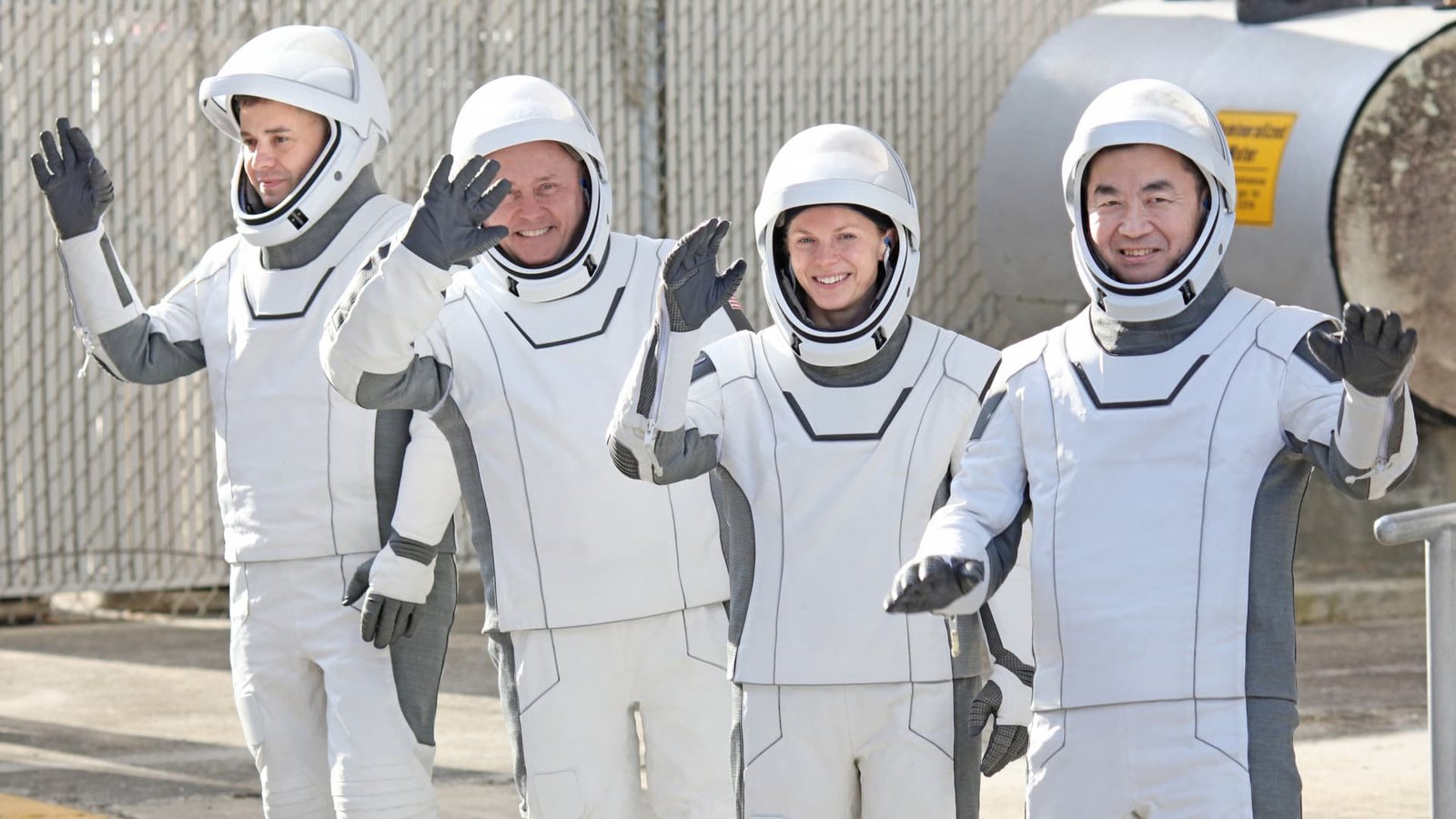
Crew-11 mission astronauts wave as they depart the Neil A. Armstrong Operations and Checkout Building en route to launch complex LC-39A at the Kennedy Space Center in Cape Canaveral, Florida on August 1, 2025. From L/R are Roscosmos cosmonaut Oleg Platonov, NASA astronaut Mike Fincke, NASA astronaut and mission commander Zena Cardman and JAXA astronaut Kimiya Yui.
Gregg Newton | Afp | Getty Images
NASA will bring Crew-11 astronauts back to Earth from the International Space Station, weeks earlier than planned, due to a medical situation with an unnamed crew member, NASA Administrator Jared Isaacman announced Thursday afternoon.
The agency said earlier in the day that it had postponed a spacewalk by U.S. astronauts outside the ISS due to the medical situation that arose on Wednesday.
The spacewalk would have seen ISS Commander Mike Fincke and flight engineer Zena Cardman exit the space station for 6.5 hours to install routing cables and other power equipment to support a new solar array.
NASA Associate Administrator Amit Kshatriya said at a press conference Thursday the solar array will be installed later and that the upgrade was not a necessity for crew safety or to maintain ISS operations.
Fincke and Cardman are members of NASA’s Crew-11 alongside colleagues from space agencies in Japan and Russia, Kimiya Yui and Oleg Platonov, respectively.
The crew launched from NASA Kennedy Space Center on a SpaceX Dragon spacecraft and Falcon 9 rocket on Aug. 1, 2025.
The agency said it would not disclose the crew member’s name or specific condition due to medical privacy.
NASA Chief Medical Officer James D. Polk said at a press conference Thursday that the astronaut’s condition is considered stable and the medical situation did not arise from any “injury in pursuit of operations.”
Polk also said there is “a very robust suite of medical hardware on board the International Space Station,” but it doesn’t include all the tools physicians would have in a hospital emergency department to complete a full patient workup. The astronaut’s “medical incident was sufficient enough,” he said, that NASA decided to bring Crew-11 back early due to “lingering risk.”
The Crew-11 astronauts’ return was planned for around March. The decision to bring the astronauts back early due to a medical situation represents a first for NASA.
The last early contingency return by the agency involved its STS-83 Space Shuttle mission in 1997, when one of Columbia’s fuel cells failed in orbit. That mission landed safely.
CORRECTION: This story has been updated to reflect that NASA is still working to determine the exact date for the return flight.